What is Digital Literacy?
“Digital literacy is the ability to problem solve and investigate, manage, share, and create data, information, and ideas in a society where living, learning and working is increasingly through digital technologies” (ALIA ACSL 2024).
Why does it matter?
“Digital literacy is a general capability in the Australian Curriculum. This means that schools are focused on helping students to develop knowledge and skills needed to “create, manage, communicate and investigate data, information and ideas, and solve problems” (Australian Curriculum 2026).
What is the role of school libraries?
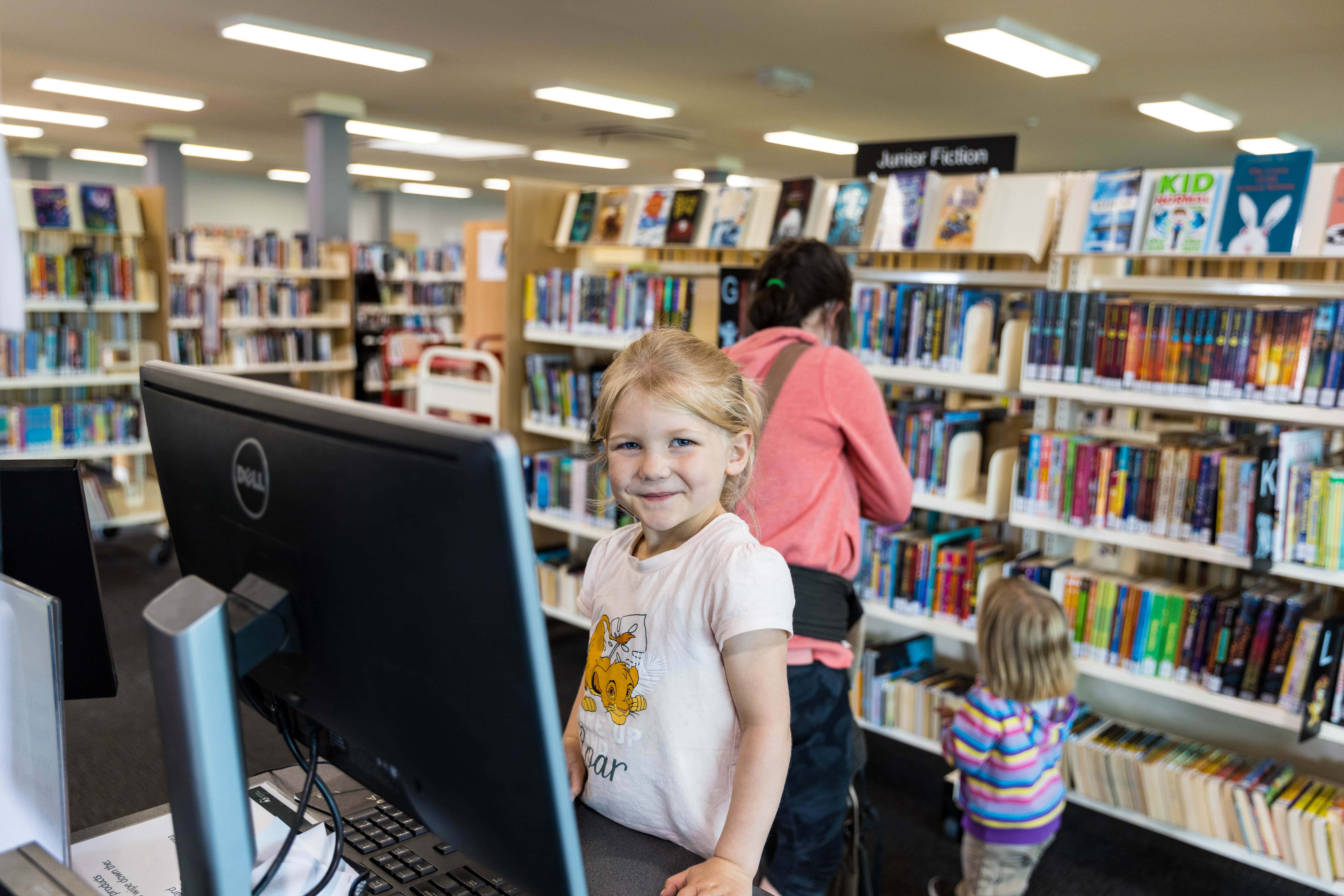
Qualified library professionals undertake professional learning about digital literacy and model good information literacies skills. They help students develop the knowledge and skills they need to find, evaluate and use quality information.
The 4 elements of the Digital Literacy general capability
Practising digital safety and wellbeing
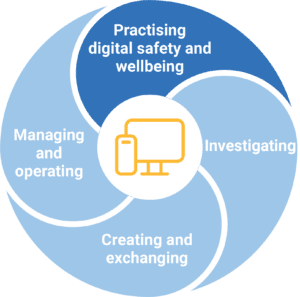
Developing skills to address online risks:
- Manage online safety
- Manage digital privacy and identity
- Manage digital wellbeing
Investigating
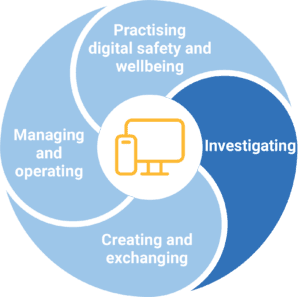
Curating information from digital resources:
- Locate information
- Acquire and collate data
- Interpret data
Creating and exchanging
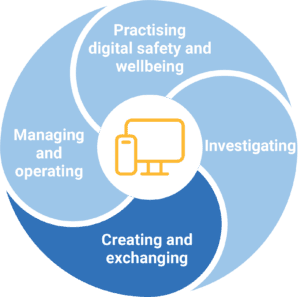
Using digital tools to plan and manage to complete tasks and projects:
- Plan
- Create, communicate and collaborate
- Respect intellectual property
Managing and operating
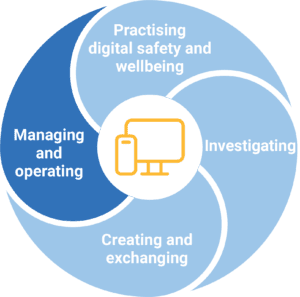
Interacting with information, saving content appropriately so it can be retrieved:
- Manage content
- Protect content
- Select and operate tools
Attribution
© Australian Curriculum, Assessment and Reporting Authority (ACARA) 2010 to present, unless otherwise indicated. This material was downloaded from the Australian Curriculum website (Website) (accessed 7/10/2026) and was not modified. The material is licensed under CC BY 4.0 Attribution 4.0 International Deed. Version updates are tracked in the ‘Curriculum version history’ section on the ‘About the Australian Curriculum‘ page of the Australian Curriculum website.
ACARA does not endorse any product that uses the Australian Curriculum or make any representations as to the quality of such products. Any product that uses material published on this website should not be taken to be affiliated with ACARA or have the sponsorship or approval of ACARA. It is up to each person to make their own assessment of the product, taking into account matters including, but not limited to, the version number and the degree to which the materials align with the content descriptions and achievement standards (where relevant). Where there is a claim of alignment, it is important to check that the materials align with the content descriptions and achievement standards (endorsed by all education Ministers), not the elaborations (examples provided by ACARA).
Digital Literacy deep dive
“Digital literacy is a fundamental component of literacy learning. It can be looked upon as an extension of the grounding literacy skills of reading, writing, listening and speaking. Literacy has always been an essential vehicle for the acquisition of knowledge. With our ever-increasing engagement with digital tools, we require the development of knowledge, values, communication skills and critical thinking relevant for the information or digital age” (Digital Literacy Development background paper 2024).
To learn more, download Digital Literacy: About the General capability and read more about digital literacy, information literacies and media literacy.
Digital Literacy
- eSafety Commissioner, eSafety education
- Student Wellbeing Hub, Online safety
- Madison’s Library, Teaching students AI basics
- Creative Commons Australia, Education & learning
- Learning Potential, Wanted: digital literacy
- Teacher Magazine, Digital literacy search
- Digital Technologies Hub, Digital Literacy and Digital Technologies
Information Literacies
- NSW Department of Education, Information Fluency Framework
- Madison’s Library, Literacies
- National Library of Australia: Media and Information Literacy
- Charles Sturt University, Libraries Research Group
- CILIP Information Literacy Group
- Garrison & Oddone, It’s a skill everybody needs to learn
- Grimmett, The information fluency framework
- IASL Media/Information Literacy
- IFLA Information Literacy Section
- Merga, TikTok and digital health literacy
- Merga and Mat Roni, School library professionals’ perceptions of students’ digital information literacy
Media Literacy
- National Library of Australia, What is fake news, misinformation, and disinformation?
- Australian Media Literacy Alliance, Media Literacy Framework
- BTN, Media Literacy Special
- State Library of Queensland, Fact or Fiction
- ABC Education, Interactive: Source checker
- Teacher Magazine, PISA 2029: Media and AI Literacy